
The Dress Shop’s Small Economy
Maigret and the Dead GirlThis flow traces Elisabeth Coumar’s shop as a precarious shelter and informal economy for women living on the margins.
increasing Bearing strength in each event
 decreasing
Bearing strength in each eventdecreasingA Shop Open Late
A Shop Open Late
A Local Business
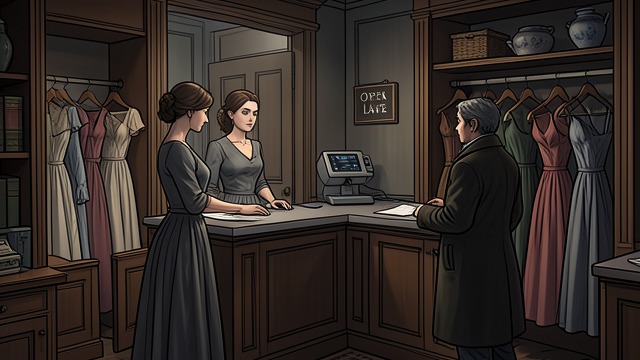
Elisabeth Coumar keeps a small model-gown shop on Rue de Douai, serving performers and women who need clothes at the last minute. Renting dresses lets customers attend places they otherwise could not afford.
A Familiar Customer
When Jules Maigret brings Louise’s blue dress, Coumar recognizes it immediately. Her shop becomes the first place where someone can connect the anonymous victim to a choice she made shortly before dying.
Louise’s First Rental
Louise’s First Rental
An Unusual Request
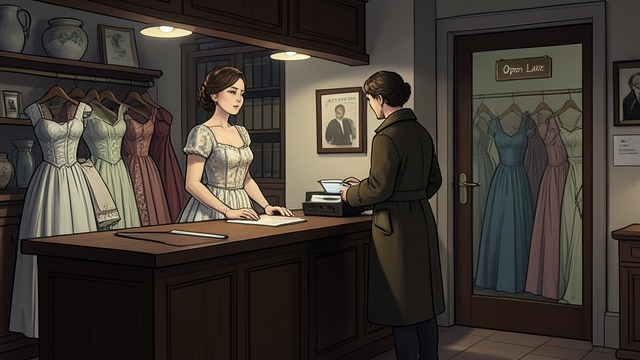
Louise once rented the same blue dress because she could not afford to buy an evening gown. She returned it the next day, paid the fee, and left Coumar with the impression of a young woman attempting to enter a world beyond her means.
A Trace of Agency
The first rental shows Louise making a deliberate effort to appear appropriately dressed. Later, her return for the same gown will turn this ordinary transaction into an important marker of her deteriorating finances and urgent purpose.
Viviane’s Quiet Presence
Viviane’s Quiet Presence
An Informal Refuge
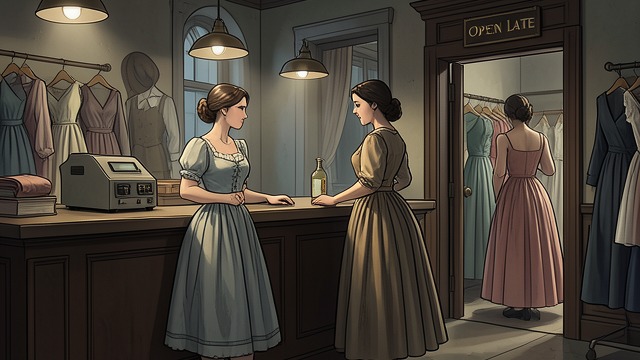
Viviane lives with Elisabeth Coumar as a protégée, helping with customers and the clothes. Coumar says that she takes in young women who have run out of money and need somewhere to sleep.
Care with Unequal Power
Viviane appears quiet and almost servile, while Coumar’s generosity gives her shelter and direction. Their arrangement echoes other forms of improvised companionship in the novel, where kindness can coexist with dependence.
The Last-Minute Exchange
The Last-Minute Exchange
Clothes for Deposit
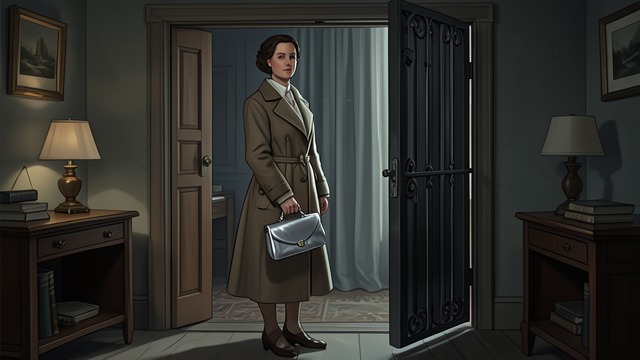
Louise returns to rent the gown again but cannot leave a cash deposit. Instead she gives Coumar her own dress and coat, then borrows suitable accessories and a silver evening bag.
A Narrow Margin
The exchange makes visible how little Louise owns: she needs a borrowed appearance and has only a few banknotes. The silver bag will later become entangled in the fatal struggle, linking a practical favor to the case’s central accident.
Clues in the Returned Clothes
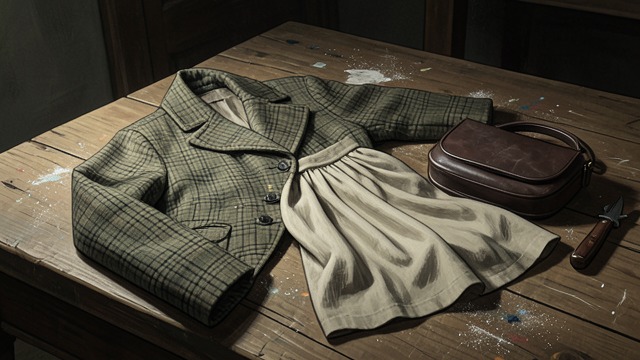
Clues in the Returned Clothes
A Coat and a Label
The clothes Louise left behind include a cheap checked coat, handmade dress, and empty handbag. Their modest condition contradicts the borrowed evening appearance in which the body was found.
Material Evidence
Police technicians examine the garments for dust, fibers, and paint. The clothes help establish the shape of Louise’s ordinary life, while the evening dress explains why early assumptions about her occupation were misleading.
The morning after Louise’s death
About a month before the murder
The morning Maigret visits the shop
Around nine in the evening before the murder
The first days of the investigation
